Flikr Photostream

Created with flickr badge.

Friday, June 7, 2024

In Search of Excellence in Colorado City


I'm on my way to Colorado City soon... and so excited.
My Quest... to learn the secret sauce that makes Colorado City #1 in our county


More to come after I visit our colleagues in Colorado City

Empowerment Scholarship Accounts (ESA)


While there are no reports that explore the impact of ESA's on individual counties, this data may be secured via the AZ Dept. of Education. Leveraging other publicly available data sets, the calculations as to statewide fiscal impact can be made using a variety of different inputs based on desired presentation of data.

For this analysis, none of that was done. Instead, the data was entered based on AZDOE data, then their average award was used to calculate total value of ESA's. 

I find the data has wide variance in the early quarters. I attribute this to the "newness" of the project, different leadership and a "shaking out" of the new ESA program which now has over 75,000 students enrolled statewide.

Based on estimates, one can project the fiscal impact as follows;


I'm getting ready to head to a forum, so I am not including further quantitative data at this time and, as you can see, scant if any qualitative analysis. 

More to come

George Washington - He Who Honored Everybody


Rules of Civility and Decent Behavior

George Washington wrote out 110 “Rules of Civility and Decent Behavior in Company and Conversation.” These rules are believed to have been written down the father of our country when he was around fourteen years of age. His father, Augustine Washington passed away when George was about 11 years old, so he had to grow up fast. 

These rules were drawn from a popular English text, Youth’s Behaviour, or Decency in Conversation Amongst Men, which was itself an adaptation of a 1595 work written by French Jesuit priests. The rules instruct students to practice consideration and respect towards others by paying careful attention to body language, dress, and speech.

The first English translations of the French rules appeared in 1640, and are ascribed to Francis Hawkins, the twelve-year-old son of a doctor. Richard Brookhiser, in his book on Washington wrote, "all modern manners in the western world were originally aristocratic. Courtesy meant behavior appropriate to a court; chivalry comes from chevalier - a knight." Yet Washington was to dedicate himself to freeing America from a court's control.

Could manners survive the operation? Without realizing it, the Jesuits who wrote them, and the young man who copied them, were outlining and absorbing a system of courtesy appropriate to equals and near equals. When the company for whom the decent behavior was to be performed expanded to the nation, Washington was ready. Parson Weems got this right, when he wrote that it was "no wonder everybody honored him who honored everybody.”

In placing these rules here, a few very minor edits have been made, but none so as to change intent or meaning. The original writings may be viewed in the Library of Congress


Rules of Civility and Decent Behavior


1. Every action done in company ought to be with some sign of respect to those who are present.

2. When in company,  put not your hands to any part of the body, not usually discovered.

3. Show nothing to your friend that may affright him

4. In the presence of others sing not to yourself with a humming noise, nor drum with your fingers or feet.

5. If you cough, sneeze, sigh, or yawn, do it not loud but privately; and speak not in your yawning, but put your handkerchief or hand before your face and turn aside.

6. Sleep not when others speak, sit not when others stand, speak not when you should hold your peace, walk not on when others stop.

7. Put not off your clothes in the presence of others, nor go out your chamber half dressed.

8. At play and at fire it is good manners to give place to the last comer, and affect not to speak louder than ordinary.

9. Spit not in the fire, nor stoop low before it nor put your hands into the flames to warm them, and do not set your feet upon the fire especially if there be meat before it.

10. When you sit down, keep your feet firm and even, without putting one on the other or crossing them.

11. Shift not yourself in the sight of others nor gnaw your nails.

12. Shake not the head, feet, or legs. Roll not the eyes nor lift not one eyebrow higher than the other. Wry not the mouth, and bedew no man’s face with your spittle, by approaching too near him when you speak.

13. Kill no vermin as fleas, lice ticks in the sight of others, if you see any filth or thick spittle put your foot dexterously upon it if it be upon the clothes of your companions, put it off privately, and if it be upon your own cloths return thanks to him who puts it off.

14. Turn not your back to others especially in speaking, jog not the table or desk on which another reads or writes, lean not upon any.

15. Keep your nails clean and short also your hands and teeth clean, yet without showing any great concern for them.

16. Do not puff up the cheeks, loll not out the tongue, rub the hands, or beard, thrust out the lips, or bite them or keep the lips too open or too close.

17. Be no flatterer, neither play with any that delights not to be played withal.

18. Read no letters, books, or papers in company but when there is a necessity for the doing of it you must ask leave: come not near the books or writings of another so as to read them unless desired or give your opinion of them unasked also look not nigh when another is writing a letter.

19. Let your countenance be pleasant but in serious matters somewhat grave.

20. The gestures of the body must be suited to the discourse you are upon.

21. Reproach none for the infirmities of nature, nor delight to put them that have in mind thereof.

22. Show not yourself glad at the misfortune of another though he were your enemy.

23. When you see a crime punished, you may be inwardly pleased; but always show pity to the suffering offender.

24. Do not laugh too loud or too much at any public spectacle.

25. Superfluous compliments and all affectation of ceremony are to be avoided, yet where due they are not to be neglected.

26. In pulling off your hat to persons of distinction, as noblemen, justices, churchmen etc., make a reverence, bowing more or less according to the custom of the better bred, and quality of the person. Amongst your equals expect not always that they should begin with you first, but to pull off the hat when there is no need is affectation, in the manner of saluting and re-saluting in words keep to the most usual custom.

27. 'Tis ill manners to bid one more eminent than yourself be covered as well as not to do it to whom it's due likewise he that makes too much haste to put on his hat does not well, yet he ought to put it on at the first, or at most the second time of being asked; now what is herein spoken, of qualification in behavior in saluting, ought also to be observed in taking of place, and sitting down for ceremonies without bounds is troublesome.

28. If anyone comes to speak to you while you are sitting, stand up though he be your inferior, and when you present seats let it be to everyone according to his degree.

29. When you meet with one of greater quality than yourself, stop, and retire especially if it be at a door or any straight place to give way for him to pass.

30. In walking the highest place in most countries seems to be on the right hand therefore place yourself on the left of him whom you desire to honor: but if three walk together the middle place is the most honorable while the wall is usually given to the most worthy if two walk together.

31. If anyone far surpasses others, either in age, estate, or merit yet would give place to a meaner than himself in his own lodging or elsewhere the one ought not to except it, so he on the other part should not use much earnestness nor offer it above once or twice.

32. To one that is your equal, or not much inferior you are to give the chief place in your lodging and he to who 'is offered ought at the first to refuse it but at the second to accept though not without acknowledging his own unworthiness.

33. They that are in dignity or in office have in all places precedence but whilst they are young they ought to respect those that are their equals in birth or other qualities, though they have no public charge.

34. It is good manners to prefer them to whom we speak before ourselves especially if they be above us with whom in no sort we ought to begin.

35. Let your discourse with men of business be short and comprehensive.

36. Artificers & persons of low degree ought not to use many ceremonies to lords or others of high degree but respect and highly honor them, and those of high degree ought to treat them with affability & courtesy, without arrogance.

37. In speaking to men of quality do not lean nor look them full in the face, nor approach too near them, and at least keep a full pace from them.

38. In visiting the sick, do not presently play the physician if you do not know therein.

39. In writing or speaking, give to every person his due title according to his degree and the custom of the place.

40. Strive not with your superiors in argument, but always submit your judgment to others with modesty.

41. Undertake not to teach your equal in the art himself professes; it savors of arrogance.

42. Let thy ceremonies in courtesy be proper to the dignity of his place with whom thou converses for it is absurd to act the same with a clown and a prince.

43. Do not express joy before one sick or in pain for that contrary passion will aggravate his misery.

44. When a man does all he can, though it succeeds not well, blame not him that did it.

45. Being to advise or reprehend anyone, consider whether it ought to be in public or in private; presently, or at some other time in what terms to do it and in reproving show no sign of choler but do it with all sweetness and mildness.

46. Take all admonitions thankfully in what time or place soever given but afterwards not being culpable take a time & place convenient to let him know it that gave them.

47. Mock not nor jest at anything of importance break no jest that are sharp biting and if you deliver anything witty and pleasant abstain from laughing thereat yourself.

48. Wherein you reprove another be unblameable yourself; for example is more prevalent than precepts.

49. Use no reproachful language against anyone, neither curse nor revile.

50. Be not hasty to believe flying reports to the disparagement of any.

51. Wear not your clothes, foul, ripped or dusty but see they be brushed once every day at least and take heed that you approach not to any uncleanness.

52. In your apparel, be modest and endeavor to accommodate nature, rather than to procure admiration and keep to the fashion of your equals such as are civil and orderly with respect to times and places.

53. Run not in the streets, neither go too slowly nor with mouth open go not shaking your arms kick not the earth with your feet, go not upon the toes, nor in a dancing fashion.

54. Play not the peacock, looking everywhere about you, to see if you be well decked, if your shoes fit well if your stockings sit neatly, and cloths handsomely.

55. Eat not in the streets, nor in the house, out of season.

56. Associate yourself with men of good quality if you esteem your own reputation; for 'is better to be alone than in bad company.

57. In walking up and down in a house, only with one in company if he be greater than yourself, at the first give him the right hand and stop not till he does and be not the first that turns, and when you do turn let it be with your face towards him, if he be a man of great quality, walk not with him cheek by jowl but somewhat behind him; but yet in such a manner that he may easily speak to you.

58. Let your conversation be without malice or envy, for 'is a sign of a tractable and commendable nature: and in all causes of passion admit reason to govern.

59. Never express anything unbecoming, nor act against the rules moral before your inferiors.

60. Be not immodest in urging your friends to discover a secret.

61. Utter not base and frivolous things amongst grave and learned men nor very difficult questions or subjects, among the ignorant or things hard to be believed, stuff not your discourse with sentences amongst your betters nor equals.

62. Speak not of doleful things in a time of mirth or at the table; speak not of melancholy things as death and wounds, and if others mention them change if you can the discourse tell not your dreams, but to your intimate friend.

63. A man ought not to value himself of his achievements, or rare qualities of wit; much less of his riches virtue or kindred.

64. Break not a jest where none take pleasure in mirth laugh not aloud, nor at all without occasion, deride no man’s misfortune, though there seem to be some cause.

65. Speak not injurious words neither in jest nor earnest scoff at none although they give occasion.

66. Be not forward but friendly and courteous; the first to salute hear and answer & be not pensive when it is time to converse.

67. Detract not from others neither be excessive in commanding.

68. Go not thither, where you know not, whether you shall be welcome or not. Give not advice without being asked & when desired do it briefly.

69. If two contend together take not the part of either unconstrained; and be not obstinate in your own opinion, in things indifferent be of the major side.

70. Reprehend not the imperfections of others for that belongs to parent's masters and superiors.

71. Gaze not on the marks or blemishes of others and ask not how they came. What you may speak in secret to your friend deliver not before others.

72. Speak not in an unknown tongue in company but in your own language and that as those of quality do and not as the vulgar; sublime matters treat seriously.

73. Think before you speak pronounce not imperfectly nor bring out your words too hastily but orderly and distinctly.

74. When another speaks be attentive yourself and disturb not the audience if any hesitate in his words help him not nor prompt him without desired, interrupt him not, nor answer him till his speech be ended.

75. In the midst of discourse ask not of what one treateth but if you perceive any stop because of your coming you may well entreat him gently to proceed: if a person of quality comes in while your conversing it's handsome to repeat what was said before.

76. While you are talking, point not with your finger at him of whom you neither discourse nor approach too near him to whom you talk especially to his face.

77. Treat with men at fit times about business and whisper not in the company of others.

78. Make no comparisons and if any of the company be commended for any brave act of virtue, commend not another for the same.

79. Be not apt to relate news if you know not the truth thereof. In discoursing of things you have heard name not your author always a secret discover not.

80. Be not tedious in discourse or in reading unless you find the company pleased therewith.

81. Be not curious to know the affairs of others neither approach those that speak in private.

82. Undertake not what you cannot perform but be careful to keep your promise.

83. When you deliver a matter do it without passion & with discretion, however mean the person be you do it too.

84. When your superiors talk to anybody hearken not, neither speak nor laugh.

85. In company with those of higher quality than yourself speak not 'til you are asked a question then stand upright put off your hat & answer in a few words.

86. In disputes, be not so desirous to overcome as not to give liberty to each one to deliver his opinion and submit to the judgment of the major party especially if they are judges of the dispute.

87. Let thy carriage be such as becomes a man grave settled and attentive to that which is spoken. Contradict not at every turn what others say.

88. Be not tedious in discourse, make not many digressions, nor repeat often the same manner of discourse.

89. Speak not evil of the absent for it is unjust.

90. Being set at meat scratch not, neither spit, cough or blow your nose except when there be a necessity for it.

91. Make no show of taking great delight in your victuals, feed not with greediness; cut your bread with a knife, lean not on the table neither find fault with what you eat.

92. Take no salt or cut bread with your knife greasy.

93. Entertaining anyone at the table, it is decent to present him with meat; undertake not to help others undesired by the master.

94. If you soak bread in the sauce let it be no more than what you put in your mouth at a time and blow not your broth at the table but stay till cools of itself.

95. Put not your meat to your mouth with your knife in your hand neither spit forth the stones of any fruit pie upon a dish nor cast anything under the table.

96. It's unbecoming to stoop much to one’s meat keep your fingers clean & when foul wipe them on a corner of your table napkin.

97. Put not another bit into your mouth till the former is swallowed. Let not your morsels be too big for the jowls.

98. Drink not nor talk with your mouth full; neither gaze about you while you are drinking.

99. Drink not too leisurely nor yet too hastily. Before and after drinking, wipe your lips; breathe not then or ever with too great a noise, for it is uncivil.

100. Cleanse not your teeth with the tablecloth, napkin, fork, or knife; but if others do it, let it be done without a peep to them.

101. Rinse not your mouth in the presence of others.

102. It is out of use to call upon the company often to neither eat; nor need you drink to others every time you drink.

103. In the company of your betters, be not longer in eating than they are; lay not your arm but only your hand upon the table.

104. It belongs to the chiefest in company to unfold his napkin and fall to meat first, but he ought then to begin in time and to dispatch with dexterity that the slowest may have time allowed him.

105. Be not angry at the table whatever happens & if you have reason to be so, show it not; put on a cheerful countenance especially if there be strangers, for good humor makes one dish of meat a feast.

106. Set not yourself at the upper of the table; but if it were your due or that the master of the house will have it so, contend not, least you should trouble the company.

107. If others talk at the table, be attentive but talk not with meat in your mouth.

108. When you speak of God or his attributes let it be seriously & with reverence. Honor & obey your natural parents although they are poor.

109. Let your recreations be manful not sinful.

110. Labor to keep alive in your breast that little spark of celestial fire called conscience.


Tuesday, July 11, 2023

K-12 Safety


K-12 Safety

Introduction

In recent years, ensuring safety in K-12 schools has become a top priority for educators, parents, and policymakers. The need for a secure and nurturing environment in schools is paramount to promote effective learning and development among students. This article aims to explore various aspects of safety in K-12 schools in 2022, including best practices, strategies, and challenges. By implementing effective safety measures, schools can provide a conducive environment for students to thrive academically, emotionally, and socially.

The Importance of Safety in K-12 Schools

Ensuring safety in K-12 schools is of utmost importance as it directly impacts the well-being and overall development of students. When students feel safe and secure, they can focus on learning and growth without distractions. Safety measures also provide reassurance to parents, fostering a sense of trust in the educational institution. By prioritizing safety, schools create an environment where students can flourish both academically and personally.

Best Practices for Safety in K-12 Schools

1. Developing a Comprehensive Safety Plan

A well-defined safety plan is the foundation of an effective safety program in K-12 schools. This plan should include protocols for emergencies such as fires, natural disasters, or intruders. Regular drills and training sessions should be conducted to ensure that students and staff are well-prepared to respond appropriately in such situations.

2. Implementing Access Control Measures

Controlling access to school premises is crucial for maintaining a secure environment. Schools should invest in access control systems such as ID cards, key fobs, or biometric systems to regulate entry and exit. Additionally, visitor management protocols should be in place to monitor individuals entering the premises.

3. Enhancing Physical Security

To prevent unauthorized access and ensure the safety of students and staff, schools should have robust physical security measures. This includes installing surveillance cameras, securing entrances and exits, and implementing fencing and gating systems. Adequate lighting should be provided in parking lots and other outdoor areas to discourage potential threats.

4. Strengthening Cybersecurity

With the increasing reliance on technology in schools, it is essential to address cybersecurity concerns. Schools should have measures in place to protect sensitive student information and prevent unauthorized access to digital systems. Educating students and staff about online safety and responsible internet use is also crucial.

5. Promoting Mental Health and Well-being

Safety in K-12 schools goes beyond physical security; it also encompasses the mental health and well-being of students. Schools should prioritize creating a supportive environment that fosters emotional and psychological well-being. Implementing counseling services, promoting anti-bullying initiatives, and offering resources for students' mental health are essential components of a comprehensive safety plan. This is supported by research that shows selected strategies and the effectiveness of each.


Challenges in Ensuring Safety in K-12 Schools

1. Limited Resources

One of the significant challenges in ensuring safety in K-12 schools is the availability of limited resources. Many schools struggle with budget constraints, making it difficult to invest in advanced security systems or hire additional personnel. Finding creative solutions and seeking partnerships with local communities and organizations can help alleviate this challenge.

2. Keeping Up with Evolving Threats

Schools face the constant challenge of keeping up with evolving threats and adapting safety measures accordingly. As technology advances, so do the methods used by potential intruders or cyber attackers. Schools must stay informed about the latest safety trends and continuously update their protocols and systems to address emerging risks.

3. Balancing Security with a Positive Learning Environment

While ensuring safety is crucial, it is essential to strike a balance between security measures and maintaining a positive learning environment. Excessive security measures or an atmosphere of constant vigilance can hinder students' ability to feel comfortable and free to express themselves. Schools must adopt strategies that provide security without compromising the overall educational experience.

FAQs about Safety in K-12 Schools 2022

Q: What role do teachers play in ensuring safety in K-12 schools?

Teachers play a crucial role in ensuring safety in K-12 schools. They are responsible for implementing safety protocols, conducting drills, and being vigilant during school hours. Teachers also play a vital role in promoting a positive and inclusive classroom environment, addressing student concerns, and identifying signs of potential threats or bullying.

Q: How can parents contribute to the safety of K-12 schools?

Parents can contribute to the safety of K-12 schools by actively engaging in their child's education and school community. They can participate in parent-teacher associations, attend safety-related workshops or meetings, and communicate any concerns or suggestions regarding safety measures to school authorities. It is also essential for parents to educate their children about personal safety and encourage open communication about their experiences at school.

Q: Are there any specific safety measures for K-12 schools during the COVID-19 pandemic?

Yes, the COVID-19 pandemic has necessitated additional safety measures in K-12 schools. These may include social distancing protocols, regular sanitization of classrooms and common areas, mandatory mask-wearing, and increased ventilation. Schools may also implement hybrid learning models or remote learning options to minimize the risk of virus transmission.

Q: How can schools address the issue of bullying and ensure a safe environment for all students?

Schools can address the issue of bullying by implementing comprehensive anti-bullying policies and promoting a culture of respect and empathy. This includes educating students about the consequences of bullying, providing counseling and support for victims, and implementing disciplinary measures for the perpetrators. Creating a safe reporting system and encouraging students to speak up about instances of bullying is also essential.

Q: What should schools do to prepare for natural disasters or emergencies?

Schools should have well-established emergency response plans in place to prepare for natural disasters or emergencies. This includes conducting regular drills to familiarize students and staff with evacuation procedures, establishing communication protocols with local authorities, and maintaining emergency supply kits. Collaborating with local emergency management agencies can provide valuable guidance and resources.

Q: How can schools address the issue of online safety and cybersecurity?

To address the issue of online safety and cybersecurity, schools should educate students about responsible internet use and digital citizenship. Implementing filters and monitoring systems on school computers and networks can help prevent access to inappropriate content. Schools should also emphasize the importance of strong passwords, secure online behavior, and the potential risks associated with sharing personal information online.

Conclusion

Ensuring safety in K-12 schools is a multifaceted endeavor that requires the collaboration of educators, parents, and the wider community. By implementing best practices, addressing challenges, and prioritizing the well-being of students, schools can create a safe and supportive environment for learning and growth. With continuous evaluation and adaptation to emerging safety concerns, K-12 schools can meet the evolving needs of their students, providing them with a secure foundation for their educational journey.

============================================

"Safe Schools: A Best Practices Guide." National Center for Education Statistics

"School Safety and Security Guidelines." U.S. Department of Education

"Cybersecurity in K-12 Education: Current Challenges

c

Monday, July 3, 2023

Forgotten Presidents


Peyton Randolph ought to be remembered. He was the very first President of the very first Continental Congress. He also signed the Continental Association, a trade boycott in response to the Intolerable Acts that were instituted to punish the colonists after the Boston Tea Party. Peyton was seen by the British as ringmaster amongst instigators… 

Peyton Randolph

He was accorded the reception of any troublesome colonist amongst the court of St. James… which is to say, none whatsoever. To make matters worse, Peyton Randolph was also seen as the titular head of the troublesome colonists, and in May of 1775, when the 2nd Continental Congress began, it was once again, Peyton Randolph who was elected President. During his time as President, Peyton Randolph fell ill and stepped down to recover. It was John Hancock who replaced him as President when Congress put quill to paper and signed the Declaration of Independence. 

Each person who signed understood, in no uncertain terms, they were essentially signing their own death warrant. Of course, this could apply to their families also. Given the dim prospect of defeating the World’s greatest military force with a group of different militias, and with limited capacity to produce war materials and vulnerable to naval blockade… they signed. Such was their passion for the idea of a truly representative government.

The declaration was also designed to demonstrate, in the most practicable way, the very depth of American dedication and commitment to the cause. Such commitment greatly amplified support in the Court of Versailles and was well received by King Louis XVI.

King Louis XVI
 The French allied formally with the American cause on February 06, 1778, with the signing of the Treaty of Amity and Commerce and the Treaty of Alliance thanks, in large part, to Dr. Benjamin Franklin, our first diplomat. For Washington whose troops were suffering at Valley Forge at that time (February), this was cause for great optimism.

Smuggling routes that ran from Europe to the West Indies, and then into the southern ports where the Spanish looked the other way had kept the American Revolution afloat. When the Treaty of Aranjuez was signed on 12 April 1779, it called for French support to assist Spain in recovering its former possessions of Menorca, Gibraltar, and Spanish Florida (East and West Florida). In exchange, Spain would support the revolution.

In October 1781, the French naval blockade was instrumental in forcing a British army under Cornwallis to surrender at the Siege of Yorktown. When news of this reached London in March 1782, the government of Lord North fell and Great Britain immediately sued for peace terms. France delayed the end of the war until September 1783 in the hope of overrunning more British colonies in India and the West Indies. 

Nevertheless, when the Marquess of Rockingham was appointed Prime Minister, he immediately pushed for an acknowledgment of the independence of the United States, initiating an end to British involvement. 

What price was paid by the signors of the Declaration of Independence?

1) Five signers were captured by the British as traitors, and tortured before they died. 

2) Twelve had their homes ransacked and burned. 

3) Two lost their sons in the revolutionary army.

4) Another had two sons captured. 

5) Nine of the 56 fought and died from wounds or hardships of the revolutionary war.

Samuel Huntington

When John Jay left the Second Continental Congress to become Minister to Spain, my 3rd Cousin 7x, Samuel Huntington, was elected to succeed him as President of the Continental Congress. He signed the Declaration of Independence and the Articles of Confederation. His autograph was small but neat and precise. You can find his signature on the right side underneath Roger Sherman. On the same line higher up were John Adams and Samuel Adams.

Huntington was President of the Continental Congress when the last state ratified the Articles of Confederation (Maryland) on March 01, 1781. Thus, our first form of government was born. Upon ratification by Maryland, the transition was uninterrupted, and Huntington immediately became the first President under the Articles of Confederation. He resigned shortly thereafter having assured the new country was properly born of the Articles of Confederation. He returned to Connecticut to convalesce. Between 1784 and 1796, he served as Lieutenant Governor, Chief Justice of the Connecticut Supreme Court, and, eventually, the state's Governor. During his time, he oversaw the transition of Connecticut into statehood, the adoption of the Federal Constitution, and the beginnings of the building of a State House in the newly made capitol, Hartford. 

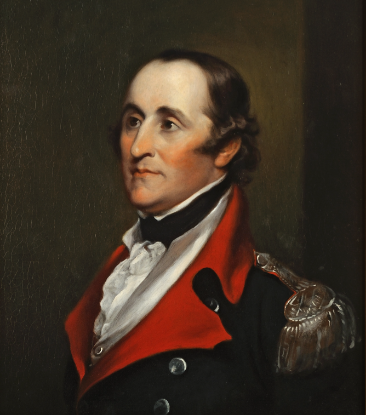
Ebenezer Huntington was my 8th great-grandfather and he had the privilege to serve with General Washington. He was present at the siege of Yorktown and is depicted mounted on the horse closest and to the right on the American side in John Trumbull’s famous painting that hangs in the U.S. Capital Rotunda.


Surrender of Cornwallis at Yorktown

Ebenezer initially joined the 2nd Connecticut Regiment and rose to Lt. Col. in the Continental Army serving with General Washington. He later became a Brigadier General in the US Army. On the Groat side, my 5th Great Uncle, Peter Groat, served with the New York 8th Albany Regiment, and his brother John served with the 3rd Albany Regiment. Six other family members are also on the rolls of the Albany Regiments.


Brigadier General Huntington

Saturday, January 19, 2019

3.5 Trillion Reasons


No country can be strong whose people are weak and poor

                                      ~ Theodore Roosevelt


In 2018, it is estimated that 18% of GDP would represent an industry with an impact of 3.5 trillion dollars, and yet Americans are going without healthcare, expenditures are rising, and more than 70% of the electorate now prefers the idea of single-payer healthcare. The Tfight in front of the United States will be epic. There are about 3.5 trillion reasons why. 


The United States of America leads all other wealthy countries in expenditures per person.

As the 20th century dawned, the United States had yet to form a health care system, there were no retirement benefits, no social security, the young nation was just being able to forget a bloody civil war, the west had been opened, and the young nation was gathering steam as an economic power. As the United States came of age; healthcare became an ongoing topic of political discourse. Americans moved away from their farms and headed toward the big city. The era of doctors making housecalls in a horse-drawn buggy were at an end.

As the twentieth century moved out of the WWI era, the cost of healthcare had already skyrocketed beyond the affordability of most Americans, this led to President Franklin Delano Roosevelt (FDR) trying to establish a Medicare for all program and the creation of old age pensions. Political compromise saw the healthcare provisions removed while Social Security was established. It was a political tradeoff.

Harry Truman tried to revive FDR’s health care plan, amplifying it to allow for coverage for everyone. The opposition howled that it was right out of the communist playbook. Truman abandoned the plan as the Korean War broke out, but years later he saw Medicare come to exist as President Lyndon B. Johnson (LBJ) signed Medicare into existence in a ceremony he conspicuously decided to hold at the Truman Presidential Library. It was a nod to the efforts of President Truman for his efforts to find a way to provide more healthcare to the American people.

In 1960 the federal government began to track national healthcare expenditures (NHE), this is when we started linking it to the nation's gross domestic product (GDP) and it started tracking at 5% of GDP; today it’s over 18%. 

President John F. Kennedy (JFK) tried for universal coverage, but instead of through the normal channels, JFK went directly to the American people. The American Medical Association (AMA) opposition was harsh, well funded, and very strong. The AMA lobbying efforts dragged the fight out. It was a fight JFK would not be able to finish. LBJ was a gifted legislator and used the legacy of JFK to expand coverage through Social Security for seniors and disabled citizens, ushering in the Social Security Act of 1965, crafting the foundation of Medicare and Medicaid.

Senator Edward "Ted" Kennedy, in the 1970s, proposed single payer healthcare similar to Canada, but President Nixon wanted corporations to provide healthcare instead. The thinking was that working-age citizens would have healthcare from their employers and seniors would get healthcare from the government. Kennedy and Nixon were able to work together across the aisle before Watergate erupted, HMO’s were created and social security was expanded. As Reagan came to power, the US was spending nearly 9% of GDP on healthcare. The Reagan White House facilitated the removal of numerous regulations while creating COBRA, a benefit still available today.

By the time Clinton was president, the NHE had passed 12% of GDP. The Clinton administration had strong hopes for a state-based cooperative. The Clinton plan enshrined the concept of not allowing pre-existing conditions to be considered. Corporations would be required to supply healthcare for all full-time employees. The Clinton administration was unable to attain their goals regarding healthcare, but Clinton did usher in CHIP and Medicaid for uninsured children. George Bush started when NHE was at 13.3% of GDP, and he facilitated Medicare Part D. Every President that tried to move America towards single payer healthcare met unsurmountable resistance on a number of levels. But each did leave a legacy that helped more American citizens get healthcare.


The attacks on 9/11 and the second Iraq war elbowed the health care debate to the sidelines. When the PPACA a.k.a. Obamacare was devised, the NHE was eclipsing 17% of GDP (17.4%). Almost ten years later, the rate of growth of healthcare expenditures has finally slowed but it still checks in at an estimated 18.2% (estimated for 2018).


Now, in 2019, after narrowly escaping the full repeal of Obamacare during the first half of the Trump administration and coming within a mere vote of seeing tens of millions of Americans lose their health care, the debate continues to rage. Only now the tide has turned. Democratic candidates beginning the process of lining up to run for President of the United States in 2020 are making single payer healthcare a debate that is front and center. 

The healthcare debate in the United States has been laden with drama during the Trump Administration. While data shows the rate of expenditure growth is starting to slow at the same time more Americans are getting coverage, nobody is talking about the data points. Healthcare has, and always will be, one of those wedge issues that can make or break a Presidential campaign. When over 70% of Americans want single-payer healthcare, you can be sure we will hear a lot about during this campaign cycle.

Monday, December 17, 2018

Good Manners

The spirit of the holidays is now upon us. Yet even though we have so much to be grateful for, our people continue to find themselves deeply divided. It’s not as pronounced where I live because of demographic similarities. I live in a place where similar views impact a very wide range of subjects. In this environment, it would be rather difficult to offer an unpopular or contrary viewpoint without inviting, shall we say, some hassles. As the old saying goes, “be careful not to invite that which bothers you”.

I sit here typing this with a business card from a national leader of the Sons of the American Revolution in front of me. I am considering joining their organization. I’m also considering the Mayflower Society, so this is something for me to think about. The Declaration of Independence was signed by one of my ancestors, Samuel Huntington. Our first ancestor to the New World preceded Samuel by one hundred and fifty-six years, arriving on the Mayflower in 1620. My family has a very long history in the colonies, and we've fought in every major conflict our nation has had; including my own service with the US Army.

Unlike military service, I’ve been cognizant that there have been some who have questioned the motivations of a person who chooses political office. I find many people take a dim view of anybody who serves in political office, and this seems to be a default position. I was introduced to that concept one fine day when I mentioned my interest in political office to somebody I admired, in hopes to gather some advice and wisdom. When that person asked why I’d care to denigrate myself and lower myself to join such a dishonorable club of miscreants, I was blown away. It never occurred to me that there would be any exploitation or self-enrichment.

Going on six years now, with tours as Deputy Mayor and Councilor in two different municipalities, I’ve seen different sides of similar issues several times. Ironically, there has been no enrichment and, as a matter of curiosity, I've kept close track of time spent in service and have estimated that council remuneration does not enrich someone. It is, instead, a function that probably returns a net between two and four dollars per hour, sometimes less, but never more. In fairness, I thought people might like to know that bit of trivia. If there are some politicians lining their pockets somehow, I have no idea how they do it.

I tend to focus on what is best for our constituents and the local economy. I like to support the economic development arena with enthusiasm. Kind of like instant replay, my default position is to say yes unless there are obvious reasons why something should not take place. Whether right or wrong, when the decision has been taken, that’s our direction. Sometimes there will be people who want to have decisions rehashed and, in some cases, they will fight for recognition of their views long after decisions have been taken.

The art of being able to move forward, with each other, is important. The difference between a political leader and a private citizen is that the political leader makes their decision in the public eye. They must be prepared to have their decision blasted by those who disagree whereas the private citizen is not required to make any pronouncement on dicey matters, thereby shielding themselves from the anger of those whose views align differently.

This all brings us full circle to the anger we have in our society. As the anger grows, the ability to express an opinion freely is diminished until finally, there are no dissenting opinions. Fear of retribution for honestly and openly discussing important issues is a powerful influence. While the current day issues come and go and leaders change, we should always keep an eye on the health of our core values of liberty and freedom. Allowing people to express themselves without fear of humiliation is important. It is an essential ingredient of our form of government; it’s also good manners.

Sunday, December 2, 2018

AMLO


AMLO Receives Baston at ceremony in Zocalo, Capitalino
 AMLO, now the 58th President of the United Mexican States has sent the nation a resounding statement that the people will not be sold out by their President. There are many things one can call Andreas Manual Lopez Obrador, but dishonest is not one of them. To the point of fault, AMLO is and always has been very forthright and up front.

AMLO is from a life where he knows, from personal experience, what it is like to walk on a dirt floor at home. He understands grinding poverty, lack of opportunity, and systemic discrimination from firsthand experience. Now he wears the tri-colour sash of the Presidency and he holds a commanding majority in the lower house (Cámara de Diputados), and a strong coalition majority in the upper chamber (Cámara de Senadores). No democratically elected President of Mexico has ever ascended to the office with such a mandate.

During his speech in Zocalo, he spoke of delivering health care to all Mexicans with a system similar to Canada or the Scandinavian countries. He would build clinics and schools, and Mexico would no longer leave the farthest reaches of the country out of the fold, there would be help for many places including Mexicali, San Louis de Colorado, Nogales… these are names that have big meaning in Arizona. To hear these names spoken in Zocalo by AMLO, it was unprecedented.

Mexican Peso / US Dollar (one year)
But Mexico has challenges, in particular, the challenges of foreign direct investment. Since his election, AMLO has softened his tone somewhat. But his cancellation of the Mexico City airport project is seen, by many in the foreign investment community, as a warning signal. The project, originally budgeted for 13 billion, would likely require the government to assure some 6 billion in bonds, so any costs associated with cancellation are to be in addition to securing the original bondholders. This must be done in order to retain global investor confidence.

Maya Train Project
AMLO has announced his intention to invest in creating good jobs for his people, and you can see the Yucatan and the Southern States will prosper from a few major job-creating projects. One of his pronouncements has been the dismal results of the steps toward the privatization of the oil and gas industry, something I wrote about this in 2013, when I watched the historic vote take place in the Camara. 


Isthmus of Tehuantepec
AMLO will be revisiting that decision and likely seeking to restore state ownership in certain aspects as of yet undetermined. AMLO also intends to forge ahead with many projects;


A sampling includes:
  • ·         Maya train project
  • ·         New petroleum refinery in Tobasco
  • ·         Isthmus of Tehuantepec to link rail from the Pacific and Atlantic oceans
  • ·         The renovation of PEMEX
  • ·         Free internet coverage in public spaces
  • ·         Planting a million hectares of fruit trees and timber
  • ·         Doubling old age pension so seniors may live in dignity
  • ·         Investing in education through grants for all high school students


Thursday, November 15, 2018

Sin Die


Procedurally, the Mayor asked for a motion to adopt resolution number 18-3268 amending resolution number 93-874, fixing the monthly compensation of the Mayor and City Councilmembers.

When the motion was made, it did not receive a second. As such, the motion does not rise to debate, it falls off the table sin die, meaning there will be no reconsideration at a future date. The matter is closed.

For background, the mover and two other members would not receive an increase through said resolution.

The Mayor should take home more than a council member if these positions are, in fact, to be paid. There are more demands on the Mayor's time due to very extensive public appearances and meetings. Every group wants the Mayor to visit with them. It is an exceptionally rare day when a group or some public entity would call up City Hall to ask for some council member to appear. That just doesn't happen. Let's face it, many people wouldn't even recognize most of their council, but they sure do know their Mayor. It's the Mayor who everybody wants to see!

During the conversation, the incumbent Mayor of the last 12 years expressed his concerns this matter would be kicked down the road indefinitely. Estimates of hourly earning would be impacted by a number of things; back of the napkin calculations arrive at these:

Mayor = $4.74 per hour
Council = $2.17 per hour

There is variation in these calculations because they vary depending on how many events a council member goes to and how much work they put in at home researching, reading, and preparing. From the expense side, as an example, a member might have to pay for a $25 or $50 meal. In addition, there are usually in-event fundraisers to donate to. These expenses are not reimbursed.

Sometimes members are given a courtesy meal if they are speaking or presenting at an event, but a lot of the time the council member reaches into their pocketbook to pay. Some members go to several such events on a monthly basis, which would heavily discount their effective rate. During very busy months, it can produce negative cash flow. And for clarity, there is an option for elected officials to participate in a statewide retirement system, but Lake Havasu does not participate.

I was asked if I am using the city's health care plan. I don't know which members of the council avail themselves of the city's health care plan and at what level, nor would I ask them or in any way represent their response pursuant to the Patient Protection and Affordable Care Act. It's just not my business.

When I was a healthcare CEO with oversight of a large regional employer, healthcare was the largest component of our employee-related expenses. When we look at remuneration, it is natural for healthcare benefits to be considered part of the overall "total rewards" package we offer to employees. Healthcare, dental, vision, life insurance, disability, paid time off, sick days, paid family leave, and maternity leave are all considered part of the overall basket of benefits. These benefits are usually inclusive of a matching 401k plan or, possibly, a retirement plan synchronized by larger groups, such as a state organization.

There are assumptions that require normalization if we are to leverage them to understand overall compensation packages. The development of a model for this with input fields applicable to public officials does require the removal of commonly leveraged fields. For instance, in some municipalities, the Mayor and Council have no retirement plan nor do they receive IRA and/or 401k funds. We are not involved with any retirement plans so this data field would be removed. Things like foregone revenue, however, would need to be added. For example, if a council member takes two work days off for the city's budget deliberations, they cannot earn income from their job for those two days nor will they be paid by the city for this time. These budget deliberations shape the future of the city and account for hundreds of millions of dollars and directly impact some 450 plus employees and their families. This category of time is referred to as foregone revenue and should be calculated at the rate of the private employer, but then we ask if that would be net or inclusive of any benefits accrued separately. Then we have to ask if this might be calculated based on benefitted positions or if consulting rates may be applied. After normalizing many different unique circumstances, we can test various assumptions to evaluate the impact on the ratepayers.

According to some citizens, there should be no pay at all. Unfortunately, such a policy would probably act as a deterrent to a cross-section of people currently in the workforce. Many who need income from multiple streams would be grateful to serve, but they might not be able to reasonably afford a campaign. If elected, they could face the prospect of giving up income.

Offering a net effective rate below minimum wage is likely to discourage low-income people from engaging in elected office. In my opinion, the government is enhanced by diversity. Structuring ways to stifle socioeconomic diversity in a democracy is counterproductive to the intent of the institution itself.

I suspect it would be safer, from a legal standpoint, to either have the office be entirely free and removed from employment status with the city or paid at the level of Arizona's minimum wage. Either direction, it seems, would remove the implications of contravening legislation like the U.S. Fair Labor Standards Act and Arizona's Fair Wages and Healthy Families Act. Of the two options, I think it prudent to choose minimum wage. The question would remain, however, as to how the wages would be tallied up and what the formulas would look like.

Wednesday, October 17, 2018

Water in the Desert

Lower Colorado River Basin Water and LHC

Lake Mead and Lake Powell - The Balancing Act

Both are increasingly functioning as one reservoir system whereby elevations have been managed to maintain Lower Colorado River water users in a “non-shortage” position. Due to years of drought conditions reducing inflows, the system now suffers from substantial drawdowns imposed by the expanding structural deficit, currently about 770,000 acre-feet per year. The Metropolitan Water District of Southern California, which has priority one water rights, plans an additional use of 200,000 acre-feet in the coming year.

Without any offsetting cutbacks, we are approaching a shortage mark of a million acre-feet per year. That would be, roughly estimated, about 325 billion gallons of water or enough for about 4.46 million people to use around 200 gallons of water per day for one year. That’s our structural deficit in the Lower Colorado River Basin. When we combine that with the naturally declining shape of the reservoir system, we can deduce that elevation levels will erode faster and faster assuming all other conditions remain equal or on trend lines; conditions like weather and rainfall. Finally, some emerging research has shown indicators there could be more sedimentation in the system than previously thought. That, of course, would be yet another detraction from system storage capacity.

The U.S. Department of the Interior Bureau of Reclamation operates the hydropower output of the Western United States. Hydropower plants currently account for about 7% of the U.S. energy mixture. In Arizona, most of our electricity is generated by natural gas and nuclear energy. Hoover Dam produces about 4 billion kilowatt-hours per year (Reclamation U. B., 2018), enough for about 1.3 million people. Arizona uses about 18.9% while Nevada gets 23.3%, the Metropolitan Water District of Southern California gets 28.5%, Los Angeles gets 15.4%, and there are numerous smaller allocations.

It is important to keep in mind that should the lake fall to an elevation below the required level for generating electricity, we would be pulling those kilowatt hours out of the regional distribution system. That would create a requirement to import power. The long-term compensatory mechanism is filling in the capacity by building power generation infrastructure. If hydro-generated electricity from the Colorado River Dam system is compromised, some estimates would suggest consumers could be hit with 25% (or more) additional cost per kilowatt hour. Water shortages that reduce electricity generation capacity will translate to higher power costs.

The elevation in Lake Mead that triggers a federally declared shortage is 1,075 feet. A recent study (AMWUA, 2018) from the Bureau of Reclamation Boulder Canyon Operations Office shows that projecting 8.23 million acre-feet released from Powell in 2018 would leave Powell’s elevation above 3,575 feet and Lake Mead would be below 1,075 feet, this would be a trigger point and is projected to transpire in May of 2019, one month after a shortage declaration point in April, thereby postponing an actual shortage declaration until 2020, unless inflows more than offset expected losses.

2018 water year hydrology summary shows the unregulated inflow to Lake Powell was 4.76 maf, or about 44% of the average year based on a 30-year data set. Cumulative precipitation in the Upper Colorado River Basin was about 44% of average with snowpack at about 73% of average. Tributary inflow to Lake Mead was 27% of average from the Little Colorado River and about 51% of average from the Virgin river. The Colorado River total system experienced a net decrease of 4.51 maf (Reclamation U. D., 2018) during the water year to date.

Careful management of water release while balancing the requirements of electricity generation mean the Bureau of Land Management (BLM) is engaged in strategic shifting or balancing of the lakes that allow them to operate within the scope of their requirements and hopefully, engage in a profile of operations that maximize electricity generation potential while mitigating and postponing a federally declared shortage.

A shortage declaration is governed by a set of Bureau of Reclamation (BOR) regulations known as the 2007 interim guidelines. The guidelines include key factors used when determining the declaration of shortage. The 2007 interim guidelines are part of a record of decision (ROD) concerning Colorado River interim guidelines for lower basin shortages and coordinated operations for Lake Powell and Lake Mead. (Department of the Interior, 2018)

Lake Havasu City Ramifications 

It seems probable, all else equal, that a shortage declaration is likely to take place in 2020 unless inflows into the overall system are well above normal. BOR publishes 24-month studies, these are studies done each month and rolled up to create a 2-year view. Recent 24-month studies show the structural deficit being stressed by continued drought conditions. If drought conditions remain like those we have seen in the last 24-month period, a federally declared shortage could be declared for 2020. If that transpires, there will be cutbacks to priority 4 water in Arizona.

Precipitation models continue to disappoint, and while there is some hope for El Niño to bring higher than normal precipitation, the impacts of climate change may more than offset any potential El Niño impact due to an extended growth season for deciduous plant life throughout the Upper Colorado River Basin. While it is possible precipitation may increase somewhat, predictive models show the extended season and higher temperatures impact upon vegetation use of moisture would more than offset increased precipitation. Warmer temperatures and a longer warm season will exacerbate drought conditions whenever precipitation levels fall below normal; all of which is consistent with recent trends. All which compounds to create a growing water deficit.

Lake Havasu secures 100% of its drinking water from the Colorado River by way of surface allocation. Currently, the City of Lake Havasu has rights to approximately 29,000 acre-feet of water per year, we are using less than half that amount or somewhere between 13,000 and 14,000 acre-feet. Our current allocation of water should provide adequate water use for a population roughly twice our size. This is an amazing position to be in because even if there were, for instance, a cut back of deliveries based on entitlements, our excess easily absorbs any intermediate range cutbacks.

Lake Havasu City Water Profile 

Drinking water is drawn from a Ranney well that has a production capacity of about 26 million gallons per day (mgd). The Ranney well is essentially a large diameter vertical well with numerous horizontal arms extending into a porous formation immediately under the floor of the lake. This creates a natural filtration system for the water as it is drawn into the Ranney well, and from there it is delivered to the water plant for processing.

The city maintains some 483 miles of water distribution lines that range from 36” down to 4” and serves over 31,000 residential and commercial water service points. The city maintains twenty-six tanks throughout seven pressure zones ranging from the highest elevations in the city down towards the lowest areas leveraging gravity to assist in managing pressure zones in optimal states and using lift stations where gravity is insufficient for operational requirements.

The city’s water infrastructure requires ongoing maintenance and water quality testing. The two capital intensive items to consider in forward budgeting are a secondary water supply, meaning a second Ranney well or the consideration of drilling horizontal wells under the lake, in a similar fashion to the current Ranney well. There may be some existing vertical wells where modifications may be leveraged to create horizontal access and/or new wells. I expect the cost (and risk) would be spread out across several vertical to horizontal wells enough to extend capacity during a complete shut-in event of the primary Ranney well.

The city does need a robust backup system, so we can have full cutover capability in order to take the Ranney well completely offline should that be required for maintenance needs. The cost to set up parallel production capacity that approximates our current system is going to be significant, this is part of our budget planning for water infrastructure. Accurate budget holders will depend on project timelines, capacity, abandonment costs, and the myriad of expenses associated with access, licensure, environmental, and reclamation.

I believe it is unlikely that any new ROD, or even an adjustment of the existing 2007 Interim Guidelines will bypass the intent or structure of the existing federal guidelines. In other words, there will be no major initiatives to create new “Acts of Congress” to deal with this. Instead, this is a process that has been ongoing with the U.S. Department of the Interior in the driver’s seat.

The State of Arizona currently has a steering committee that is meeting to cover areas where water conservation can be leveraged. Negotiations surrounding intentionally created surplus management will be an important part of the 2019 operating plan. Our hopes are to leverage what we must to facilitate the best outcome for the region while maintaining our full allotment of water rights.

Dealing with minor cutbacks to our full allotment would, essentially, be inconsequential and rightfully so, the city has done amazing work with conservation and getting average consumption per person almost halved since conservation efforts started many years ago. Having water allocation cutbacks drawn up based on actual use would be very different. It would be seen as a functional cap on the region population level. So far, we are not aware of any precedence in any of the legal agreements, acts, or other governing instruments that can be leveraged in such a manner as to drive cutbacks upon stated current use versus full allotment. Further, California, having a vast holding of 1st priority rights, is now starting to be more open to a dialogue of water conservation as a mechanism to limit their withdrawals.

California understands that if we drive the level of the lakes down far enough, to the point where it becomes dead storage at 895 feet, they’ll go below the level where we can release any water at all. At that point, California would have lots of priority 1 water rights, but no ability to draw any water. The states duly impacted by a federal shortage will be able to negotiate under the already established guidelines and acts but going outside of that to establish entirely new government policy at the federal level is not likely to happen on the time frame being considered. Therefore, I believe our water supply is in good shape, that we should continue to invest in monitoring and defending the principle of keeping mainstream water on the Colorado River and preventing it from being creatively liberated from our groundwater supplies through programs such as fallowing.

NASA Gravity Recovery and Climate Experiment mission (GRACE) created a nine-year slice of data analyzed for the Colorado River System; it showed groundwater accounted for 50.1 km3 of the total 64.8 km3 of freshwater loss. Groundwater is being depleted as a vastly greater rate than surface water and may impact our ability to continue to meet scheduled deliveries. This is the data, I’m afraid, I do not hear people discussing. But this data is real and I am concerned it may be even more important than the dropping levels of Lake Mead; yet it appears most of the stakeholders are blissfully unaware of the GRACE Mission data. At the very least, the rate of groundwater depletion will exacerbate the water shortage in the basin.

The Bigger Picture for Regional Water 

Unfortunately, the larger picture is that climate change is likely to have a net negative impact on the water situation for Arizona. If we continue to exacerbate the drought without seeing Lake Mead and Lake Powell start to rise again, then we are in for a fast acceleration through our shortage levels. The main reason for that is twofold… the first is obvious, yet almost entirely overlooked. We think of the surface of either lake, but the lake is a reservoir, and to really understand the volumes, one must think of what it is like as a vessel.


The above image shows a view that brings the matter of volume into clear focus. In addition, new research is emerging from Lake Havasu City insomuch as a recent underwater mapping project has revealed more sedimentary deposits than are currently used with widespread existing modeling data, thus creating some potential that certain volume assumptions may be somewhat overstated. It is thought this might apply beyond Lake Havasu; and thus render a larger impact on the entire system.

Lake Havasu City's Priority 4 (P4) Water Rights are roughly outlined below. For reference, we use about 13,000 to 14,000 acre feet per year (estimated 2017) and we have over 28,000 acre feet authorized. Even with cutbacks to those allocations, we would still have an excess of water rights over water useage, and that's how the hottest city in the nation manages to have enough water during an extended drought. And of course, Lake Havasu City has extensive conservation efforts that have paid huge dividends over the years.


The Law of the River

The law of the river is not one set of codified articles set about in some leather-bound book on the shelves of fancy law offices. Instead, it is a mixture of various acts, key legal decisions, compacts, plans, traditions, and treaties; there is also a historical context.

The Secretary of the Interior, through the Bureau of Reclamation, is responsible for water management throughout the United States. The Bureau of Reclamation’s authority is limited throughout the western United States by various reclamation instruments and acts of Congress.


Acts of Congress 

  • Reclamation Act of 1902
  • Boulder Canyon Project Act of 1928
  • The Colorado River Storage Project Act
  • Colorado River Storage Act 1956
  • Colorado River Basin Act of 1968
  • Grand Canyon Protection Act of 1992 

Key Legal Decisions / Compacts / Treaties

  • US Supreme Court, Arizona vs. California 1963
  • US Supreme Court Consolidated Decree, Arizona vs. California 2006
  • Colorado River Compact 1992
  • Upper Colorado River Basin Compact 1948
  • Mexican Water Treaty 1944
  • Key Information Points on Shortage Declarations 2007 Interim Guidelines
  • The 2007 Record of Decision creating the 2007 Interim Guidelines - ROD expires 2026


 Annual Operating Plan 

Section 602(b) of the CRBPA of 1968 requires that the Secretary transmit to the Congress and to the Governors of the Basin States, by January 1st of each year, a report describing the actual operation under the LROC for the preceding compact water year and the projected operation for the current year. This report is commonly referred to as the “Annual Operating Plan” or the “AOP.” In 1992, in the Grand Canyon Protection Act, Congress required that, in preparing the 602(b) AOP, the Secretary shall consult with the Governors of the Basin States and with the general public, including representatives of academic and scientific communities, environmental organizations, the recreation industry; and contractors for the purpose of federal power produced at Glen Canyon Dam.

24 Month Study - April Adjustment 

April adjustments to Lake Powell operations in the Upper Elevation Balancing Tier (as specified in Sections 6.B.3. and 6.B.4.) shall be based on the April 24 Month Study projections of the September 30 system storage and reservoir water surface elevations for the current Water Year. Any such adjustments shall not require re-initiation of the AOP consultation process. In making these projections, the Secretary shall utilize the April 1 final forecast of the April through July runoff, currently provided by the National Weather Service’s Colorado Basin River Forecast Center.
Off-stream Banking

The diversion of Colorado River water to underground storage facilities for use in subsequent Years from the facility used by a Contractor diverting such water

Key Definitions 


Water Year

October 1st through September 30th

24-Month Study 

The projections are updated each month using the previous month’s reservoir contents and the latest inflow and water use forecasts. In these Guidelines, the term “projected on January 1” shall mean the projection of the January 1 reservoir contents provided by the 24-Month Study that is conducted in August of the previous Year. 

Contractor 

An entity holding an entitlement to Mainstream water under (a) the Consolidated Decree, (b) a water delivery contract with the United States through the Secretary, or (c) a reservation of water by the Secretary, whether the entitlement is obtained under (a), (b) or (c) before or after the adoption of these Guidelines.

Direct Delivery Domestic Use 

Direct delivery of water to domestic end users or other municipal and industrial water providers within the Contractor’s area of normal service, including incidental regulation of Colorado River water supplies within the Year of operation but not including Off-stream Banking. For the Metropolitan Water District of Southern California (MWD) Direct Delivery Domestic Use shall include delivery of water to end users within its area of normal service, incidental regulation of Colorado River water supplies within the Year of operation, and Off-stream Banking only with water delivered through the Colorado River Aqueduct. 

Intentionally Created Surplus (ICS) 

Surplus Colorado River System water available for use under the terms and conditions of a Delivery Agreement, a Forbearance Agreement, and these Guidelines.  


Current Status 

Lake Mead Elevation Projections  


Precipitation (October 2017 – June 2018) The bulk of the entire Colorado River basin, both lower and upper, has received at least 30% less precipitation than average, this is exacerbated in the lower basin where many areas are experiencing less than half the average precipitation. While there is some potential for a return of the El Niño weather pattern, the impact that may have on precipitation in the Colorado River Basin may be negligible.

The National Weather Service (NWS) Climate Prediction Center, of the National Oceanic and Atmospheric Administration, as of September 13th, 2018, is predicting a 50-55% chance of an El Niño onset in the Northern Hemisphere in the September to October timeframe, increasing to a 65-70% chance of an El Niño during the winter months. The October 2017 to June 2018 precipitation map shows severe shortages over the clear majority of the Colorado River Basin with only a handful of areas in Northern Colorado and Southern Wyoming experiencing average or slightly above average precipitation.


Colorado River Basin Precipitation (October 2017 to June 2018) – National Weather Service (NOAA)

The Bureau of Reclamation 24-month study provides data for operational guidelines. This includes a combined monthly/annual methodology to determine the annual release volume for Lake Powell. Methodology consists of a January 1 determination of the release volume with appropriate April adjustments to those volumes in order to provide necessary flexibility to respond to changing inflow forecasts while ensuring that the operation does not result in excessive changes in monthly releases from Lake Powell.

April adjustments to Lake Powell operations in the Upper Elevation Balancing Tier (as specified in Sections 6.B.3. and 6.B.4.) shall be based on the April 24-Month Study projections of the September 30 system storage and reservoir water surface elevations for the current Water Year. Any such adjustments shall not require re-initiation of the AOP consultation process. In making these projections, the Secretary shall utilize the April 1 final forecast of the April through July runoff, currently provided by the National Weather Service’s Colorado Basin River Forecast Center, which is a monthly study on a 24-month cycle.

 2007 Interim Guideline Definitions Normal Condition A “Normal Condition” exists when the Secretary determines that sufficient mainstream water is available to satisfy 7.5 million acre-feet (maf) of annual consumptive use in the Lower Division states (Arizona, California, and Nevada). If a state will not use all of its apportioned water for the year, the Secretary may allow other states of the Lower Division to use the unused apportionment, provided that the use is authorized by a water delivery contract with the Secretary.

Surplus Condition A “Surplus Condition” exists when the Secretary determines that sufficient mainstream water is available for release to satisfy consumptive use in the Lower Division states in excess of 7.5 maf annually. The water available for excess consumptive use is surplus and is distributed for use in Arizona, California, and Nevada pursuant to the terms and conditions provided in the ISG. The current provisions of the ISG are scheduled to terminate in 2016. In general terms, the ISG link the availability of surplus water to the elevation of Lake Mead. When Lake Mead is full and Reclamation is making flood control releases, surplus supplies are unlimited. As Lake Mead’s elevation drops, surplus water amounts are reduced, and ultimately eliminated. The ISG also link surplus availability to continued progress by California in reducing its agricultural use of water to benchmarks established in the ISG. If a state does not use all of its apportioned water for the year, the Secretary may allow other Lower Division states to use the unused apportionment, provided that the use is authorized by a water delivery contract with the Secretary.

Shortage Condition A “Shortage Condition” exists when the Secretary determines that insufficient mainstream water is available to satisfy 7.5 maf of annual consumptive use in the Lower Division states. To date, the Secretary has never made such a Interim Guidelines for the Operation of Lake Powell and Lake Mead December 2007 6 ROD - Colorado River Interim Guidelines for Lower Basin Shortages and Coordinated Operations for Lake Powell and Lake Mead determination, as flow in the Colorado River has been sufficient to meet Normal or Surplus delivery amounts. When making a shortage determination, the Secretary must consult with various parties as set forth in the Consolidated Decree and consider all relevant factors as specified in the LROC, including 1944 Treaty obligations, the priorities set forth in the Consolidated Decree, and the reasonable consumptive use requirements of mainstream water users in the Lower Division states. If a state does not use all of its apportioned water for the year, the Secretary may allow other Lower Division states to use the unused apportionment, provided that the use is authorized by a water delivery contract with the Secretary.

Lake Mead Shortage Triggers Policy and interim guidelines were brought forward in 2007 that remain applicable.

kaf = thousand acre-feet
maf = million acre-feet

1,075 feet = cutback of 400 kaf
1,050 feet = cutback of 500 kaf
1,025 feet = cutback of 600 kaf


Shortage Rules - Lake Mead 


Below 1,075 
In years when Lake Mead content is projected to be at or below elevation 1,075 feet and at or above 1,050 feet on January 1, a quantity of 7.167 maf shall be apportioned for consumptive use in the Lower Division States of which 2.48 maf shall be apportioned for use in Arizona and 287,000 af shall be apportioned for use in Nevada in accordance with the Arizona-Nevada Shortage Sharing Agreement dated February 9, 2007, and 4.4 maf shall be apportioned for use in California.

Below 1,050 
In years when Lake Mead content is projected to be below elevation 1,050 feet and at or above 1,025 feet on January 1, a quantity of 7.083 maf shall be apportioned for consumptive use in the Lower Division States of which 2.4 maf shall be apportioned for use in Arizona and 283,000 af shall be apportioned for use in Nevada in accordance with the Arizona-Nevada Shortage Sharing Agreement dated February 9, 2007, and 4.4 maf shall be apportioned for use in California.

Below 1,025 
In years when Lake Mead content is projected to be below elevation 1,025 feet on January 1, a quantity of 7.0 maf shall be apportioned for consumptive use in the Lower Division States of which 2.32 maf shall be apportioned for use in Arizona and 280,000 af shall be apportioned for use in Nevada in accordance with the Arizona-Nevada Shortage Sharing Agreement dated February 9, 2007, and 4.4 maf shall be apportioned for use in California. 2. During a Year when the Secretary has determined a Shortage Condition, the Secretary shall deliver Developed Shortage Supply available in a Contractor’s DSS Account at the request of the Contractor, subject to the provisions of Section 4.C. of the 2007 Interim Guidelines.

Lake Powell Shortage Triggers 

Shortage Criteria 2007 Interim Guidelines

When projections indicate Lake Powell’s elevation will be greater than 3,575 feet but Lake Mead would be lower than 1,075 feet, a short-term shortage would take effect. That impact would be felt by way of the reduction of 400,000 acre-feet per year. Beyond that, the numbers are set at 500,000 acre-feet at an elevation of 1,050 feet and 600,000 acre-feet when Lake Mead’s elevation drops to 1,025 feet.


Mohave County Power Generation & Misc. Water Use Data Points 


2015 Mohave County Generated 3,839.25 gigawatt hours
2015 Tucson 80 gallons per capita per day (GPCD)
2015 US Average 83 GPCD
2015 Arizona Average 146 GPCD
2015 New Mexico and Texas 81 GPCD (lowest in US)
2015 Idaho 186 GPCD (highest in US)

Structural Deficit 


Rebalancing Lake Mead & Lake Powell Policy and interim guidelines allow for rebalancing Lake Mead and Lake Powell for the remainder of 2018 by having additional releases from Lake Powell into Lake Mead. The conditions trigger a rebalancing that will release, from Lake Powell, not less than 8.23 million acre-feet and not greater than 9 million acre-feet. Lake Powell and Lake Mead, under the current circumstances, are projected to bypass the capacity for rebalancing activities in 2019 due to the structural imbalance build into the system. If shortage were declared, it would have distinct impacts, but most of the outcomes can be determined in advance through a careful examination of the policy, interim guidelines, and other negotiated arrangements that have been put forth amongst the various stakeholder groups, governments, and interested parties. 

Current Status 2018-2019 

Lake Powell  end of August 2018 levels
Elevation for end of August 2018 was 3,597 feet (103 feet from full pool) and 11.2 maf (47 percent of full capacity). Average unregulated inflow was 8.76 maf, or 81percent of the 30-year average (1981-2010)

Lake Powell Projected 2019 Release to Lake Mead
The operating tier for water year 2019, established by the August 2018 24-Month Study, is the Upper Elevation Balancing Tier. Under this Tier the initial annual water year release volume is 8.23 maf but there is potential for an April 2019 adjustment to equalization or balancing releases. Based on the current forecast, an April adjustment to balancing releases is projected and Lake Powell is currently projected to release 9.0 maf in water year 2019. This projection will be updated each month throughout the water year.

Lake Powell End of water year forecast 2019
US Bureau of Reclamation Projections indicate end of water year 2019 elevation and storage using the minimum and maximum probable inflow forecast are 3,566 feet (8.8 maf, 36 percent of capacity) and 3,648 feet (17.0 maf, 70 percent of capacity), respectively. Under these scenarios, there is a 10 percent chance that inflows will be higher, resulting in higher elevation and storage, and 10 percent chance that inflows will be lower, resulting in lower elevation and storage.

Metropolitan Water District (MWD) Forecast
While continued conservation by CAP could keep the lake at 1,075 and above through 2019, California’s future use of Mead water remains a big unknown with up to 175,000 to 200,000 acre-feet of water available for withdraw from California’s Metropolitan Water District (MWD). During the same period, the Central Arizona Project, with low priority water rights, hopes to conserve 180,000 acre-feet of river water this year, essentially creating a theoretical offset for the water planned for MWD use.

U.S. Bureau of Reclamation forecast
Results of 24 Month Study published in 2018 water year for water in the Colorado River anticipates declaration of a shortage in September 2019 in Lake Mead. That would trigger the reduced water releases from federal reservoirs in “lower basin” states including Nevada and Arizona.
Colorado and other “upper basin” states Utah, Wyoming and New Mexico would face increased scrutiny of flows from headwaters into the Lake Powell reservoir. On Wednesday, Lake Powell measured 49 percent full and Lake Mead measured 38 percent full.

A primary goal of the CBS policy is to significantly reduce the probability of an involuntary, uncompensated shortage in excess of 500,000 acre-feet (the approximate level at which CAP deliveries would be reduced beyond that currently utilized for water banking). As shown in Figure 4, below, the probability of shortages exceeding 500,000 acre-feet is reduced to 5% or less through the entire modeled period under the CBS policy. By contrast, the probability of shortage under the baseline policy rapidly approaches 30% during this same period. Furthermore, as shown in Figure 5, below, the CBS policy reduces the probability of any involuntary shortage by approximately 20% over the next 20 years.

Rising Power Costs

The recent drought and decrease in power production at both Hoover Dam and Glen Canyon Dam point to the dramatic costs imposed by the loss of reservoir storage. If Lake Mead falls to 1050 feet, power rates will need to be increased to an approximate composite rate of 2.31 cents/kWh, which is a 44.3% increase over current rates. Replacement power purchases would be (depending on the user) 2.9 to 3.7 times the Hoover rate. In FY03, replacement power may have cost customers an additional $24 million (Department of the Interior, 2018).

Arizona Cutbacks

The Central Arizona Project (CAP) will be subject to the largest cutbacks. Arizona is allocated 2.8 maf annually. Most of the cutbacks are expected to impact recharge programs in the Greater Phoenix and Tucson areas, but also agricultural water deliveries as well.

Arizona Steering Committee

The Lower Basin Drought Contingency Plan ( (LDBCP, 2018) is a plan developed by Arizona, California, Nevada, and the United States to create additional contributions to Lake Mead from Arizona and Nevada, along with new contributions from California and the U.S. with incentives for additional storage in Lake Mead.

Key points to conserve come from agricultural mitigation, tribal intentionally created surplus, Arizona conservation plans and excess water. Ultimately, the goal is to secure a joint resolution from the Arizona Legislature authorizing the Arizona Department of Water Resources Director to agree to the plan. Currently, the bulk of the first level of cutbacks would be borne by CAP water users.


Informational Agreements

  • Delivery Agreement between the United States and Imperial Irrigation District (IID)
  • Delivery Agreement between the United States and The Metropolitan Water District of Southern California (MWD)
  • Delivery Agreement between the United States, Southern Nevada Water Authority (SNWA) and the Colorado River Commission of Nevada (CRCN)
  • Funding and Construction of the Lower Colorado River Drop 2 Storage Reservoir Project Agreement among the United States, SNWA, and CRCN
  • Lower Colorado River Basin Intentionally Created Surplus Forbearance Agreement among the Arizona Department of Water Resources, the Southern Nevada Water Authority, CRCN, the Palo Verde Irrigation District (PVID), IID, Coachella Valley Water District (CVWD), MWD, and the City of Needles
  • California Agreement for the Creation and Delivery of Extraordinary Conservation Intentionally Created Surplus among the PVID, IID, CVWD, MWD and the City of Needles 

Jet Propulsion Laboratory (JPL) Grace Satellite Mission 

The extent of groundwater loss may pose a greater threat to the water supply of the western United States than previously thought. NASA's Gravity Recovery and Climate Experiment, also known as the GRACE satellite mission (NASA, 2018) was designed to track changes in mass of specific geological regions, including the Colorado River Basin. The gravitational variance is then analyzed with other data points to gain an estimate of sub-surface water loss.

We have two major dilemmas that our Jet Propulsion Laboratory helps to solve through the GRACE satellite mission. First, due to the overlapping governmental responsibilities and spheres of influence, there is no consolidated framework to properly assess and track sub-surface water. In the instances where data does exist, it is incomplete. In short, it’s very hard to get accurate groundwater data from all the different constituencies in such a manner that it may effectively be used for evidence-based decisions.

The other major dilemma is that we really don’t know how much groundwater we have left simply because we do not know how much we started with nor do we have suitable data to declare, with confidence, what recharge rates may be.  These dilemmas make it very challenging to quantify amalgamated groundwater resources with a high degree of accuracy.

Accounting for month over month changes in the estimated water mass allow us to make estimates of system wide depletion rates. Monthly measurements in the change in water mass from December 2004 to November 2013 revealed the overall Colorado River Basin lost nearly 53 million acre-feet (65 cubic kilometers) of freshwater, or approximately double the volume of Lake Mead. Of that depletion, more than three-quarters of the total, approximately 41 million acre-feet, was from groundwater (Middleton, 2017).

_________________________________________________


Bibliography

AMWUA. (2018, 09 05). where-we-stand. Retrieved from Arizona Municipal Water Users Association AMWUA: http://www.amwua.org/where-we-stand/issues/colorado-riverstructural-deficit

Department of the Interior. (2018, 09 16). Colorado River Interim Guidelines (2007) for Lower Basin Shortages and the Coordinated Operations for Lake Powell and Lake Mead. Retrieved from US Bureau of Reclamation Lower Colorado Region, Programs and Strategies Record of Decision, December 2007: https://www.usbr.gov/lc/region/programs/strategies/RecordofDecision.pdf

Department of the Interior. (2018, 09 10). Conservation Before Shortage. Retrieved from U.S. Bureau of Reclamation: https://www.usbr.gov/lc/region/programs/strategies/alternatives/CBS2A.pdf

Famiglietti, S. L. (2014). Groundwater depletion during drought threatens future water security of the Colorado River Basin. Geophysical Research Letters, 41(16).

LDBCP. (2018, 09 10). Lower Basin Drought Contingency Plan Steering Committee. Retrieved from Arizona Department of Water Resources: https://new.azwater.gov/sites/default/files/media/LBDCP_Steering_Committee_Roster _8.28.pdf

Middleton, K. E. (2017). Global Sensitivity of Simulated Water Balance Indicators Under Future Climate Change in the Colorado Basin. Water Resources Research.

NASA. (2018, 09 10). Parched West Is Using Up Underground Water: NASA/UCI. Retrieved from Jet Propulsion Laboratory: https://www.jpl.nasa.gov/news/news.php?feature=4229

Reclamation, U. B. (2018, 10 01). FAQ Page. Retrieved from Reclamation Managing Water in the West: https://www.usbr.gov/lc/region/pao/faq.html

Reclamation, U. D. (2018, 10 01). Draft AOP 2019 third consultation. Retrieved from Bureau of Reclamation: https://www.usbr.gov/uc/water/rsvrs/ops/aop/AOP19_Third_Consultation_draft.pdf